



Blog / Chevrolet EV

The 2027 Chevrolet Bolt’s Charging Setup, Explained

2027 Chevy Bolt Charging
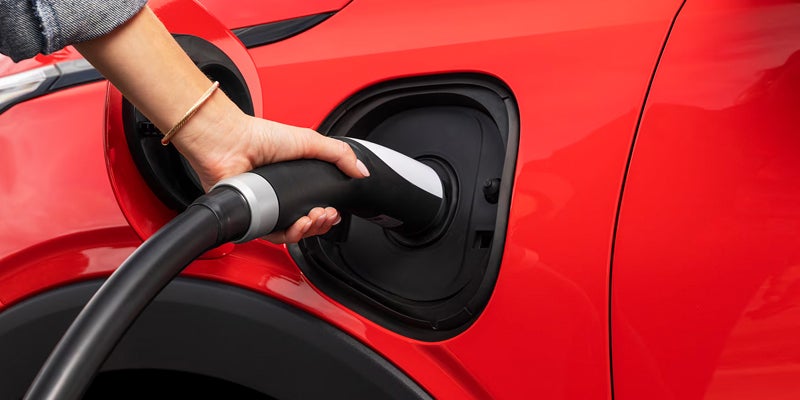
The 2027 Chevrolet Bolt has a built-in NACS charging port, a change that affects which plugs you can use at home and on the road. If you are considering a Bolt in Mansfield, it helps to plan your usual charging routine before your first longer trip.

What does the Bolt’s NACS port mean?

The NACS port lets the 2027 Bolt connect to compatible NACS chargers without an adapter. That includes select Tesla Superchargers, but compatibility varies by station. Check the station in the myChevrolet app before you drive there, and set up the charging network and payment method you will need.
You may still encounter public chargers with other connectors. A compatible CCS1 adapter may be needed for DC fast charging at a CCS1 station, while a J1772 adapter may be needed for some Level 2 chargers. The two adapters serve different purposes, so check the connector listed for each stop.

How can you charge at home?

The Bolt includes a Dual Level Charger. With a suitable standard 120-volt outlet, Level 1 charging can add range while the vehicle is parked for an extended period. Level 2 charging uses a suitable 240-volt setup and adds range faster, making it more practical for many daily driving routines.
Before relying on Level 2 charging, have a qualified electrician evaluate your electrical setup and the installation requirements. Then think about when the Bolt will be parked. You can set a home charging schedule and a target charge level through the vehicle’s charging settings. Chevrolet recommends regularly charging the 2027 Bolt to 100% and advises doing so about once a week.

How do you plan a public charging stop?

Start with your destination and the battery level you expect to have when you arrive. The Bolt’s built-in Google Maps can suggest charging stops on longer routes and account for factors such as range and station status. Before departure, confirm the station’s connector, availability, payment setup, and any adapter you need.
At a compatible DC fast charger, Chevrolet estimates that the 2027 Bolt can charge from 10% to 80% in about 25 minutes under suitable conditions. Actual time depends on factors such as battery temperature, charge level, and the station’s output. Build some flexibility into a long drive rather than treating the estimate as a guaranteed stop length.
At Graham Chevrolet in Mansfield, shoppers can look at the Bolt’s charge port and included equipment in person. Bring your typical weekly mileage and any questions about your home’s parking and electrical setup to make the conversation useful.

Posted in:

Related Posts

Wheel Alignment

Hit a Pothole? Check These Parts of Your Chevrolet Before the Next Highway Drive

A hard pothole hit can leave no obvious mark, or it can damage a tire or wheel and change how your Chevrolet drives. Before your next highway trip, take a few minutes to look over the affected wheel and pay attention to any new steering symptoms. Look at the tire and wheel first Check the tire’s sidewall and tread for a cut, bulge, or other visible damage. Look at the wheel rim for a bend or crack, and see whether the tire appears to be losing air. A bulge needs prompt professional attention, even if the tire is still holding pressure. If the tire is flat or visibly damaged, do not take it onto the highway. Some damage is difficult to see while the wheel is on the vehicle. A tire inspection can help determine whether the tire or wheel was affected and whether the tire can continue to be used. Notice what changed behind the wheel A new vibration in the steering wheel or seat may point to a tire or wheel issue. If inspection finds the tire and wheel are sound, a technician can determine whether wheel balancing is appropriate. Balancing addresses how weight is distributed as the tire and wheel rotate; it does not correct the direction the wheels point. If your Chevrolet now pulls to one side on a straight, level road, or the steering wheel sits off-center, ask about a wheel alignment check. A pothole can also affect steering or suspension parts, so the vehicle should be inspected before assuming an alignment adjustment alone will solve the problem. When should you schedule an inspection? Arrange an inspection before highway driving if you find visible damage, notice a new vibration, or feel the vehicle pulling. Tell the service advisor which wheel hit the pothole and whether the symptoms began immediately or appeared later. Those details help guide the inspection. For a Chevrolet pothole damage inspection or wheel alignment in Mansfield, OH, Graham Chevrolet can check the tires, wheels, and related components, then recommend the service the findings support.

2026 Chevy Colorado

Chevy Colorado vs Silverado 1500: The Right Truck for Workdays and Weekends

If you've been thinking about a new Chevrolet truck and have narrowed your choices down to the 2026 Chevy Colorado vs Silverado 1500, you're already looking at two of the best pickups on the market. Both are built tough, loaded with technology, and ready to handle a busy lifestyle. But they're designed for somewhat different buyers, and knowing the difference can save you a lot of second-guessing. more Size and Everyday Maneuverability When it comes to the Chevy Colorado vs Silverado 1500, size is often the deciding factor. The Colorado is a midsize truck, which makes it easier to get through parking lots, tighter city streets, and smaller job sites. If you're driving in and around Mansfield, Ohio, where you might be heading from a suburban neighborhood to a work site and back, that smaller footprint can feel like a real advantage daily. The Silverado 1500 is a full-size truck, which means it commands more presence on the road. It's longer, wider, and gives you a larger cab and bed to work with. If you regularly haul bigger loads or need to seat 5 or 6 people comfortably, the extra space makes a difference. Capability and Hauling Power The 2026 Chevrolet Silverado offers multiple engine options, including a 2.7L TurboMax™ producing 310 hp and 430 lb-ft of torque. A 5.3L V8 with 355 hp and 383 lb-ft of torque. A 6.2L V8 delivering 420 hp and 460 lb-ft of torque. As well as an available 3.0L Duramax® turbo-diesel with 305 hp and 495 lb-ft of torque, with a maximum towing capability exceeding 13,000 lbs when properly equipped. The 2026 Chevrolet Colorado is powered by a standard 2.7L TurboMax® inline-4 engine that produces 310 hp and 430 lb-ft of torque, paired with an 8-speed automatic transmission. With a maximum towing capacity of 7,700 lbs when properly equipped, the midsize pickup delivers strong performance for both daily driving and off-road adventures. Technology and Comfort on the Road Both trucks offer modern interiors with available large touchscreens, wireless charging, and available Wi-Fi hotspot connectivity. The Silverado 1500 tends to offer more premium cabin upgrades as you move up through trim levels, while the Colorado provides a well-rounded, comfortable interior that doesn't feel like you're settling. Google built-in features are also available in select Chevy vehicles across both lines, meaning you get seamless navigation, voice commands, and connected driving whether you go midsize or full-size. Which Truck Fits Your Life? A good Chevrolet truck comparison comes down to your honest priorities. If you want a smaller, efficient truck that handles weekend trails and weekday trips with ease, the Colorado is a strong fit. If you need maximum towing, more payload capacity, and room for the whole crew, the Silverado 1500 is built to step up to those demands. Visit Graham Chevrolet Cadillac to Find Your Match Choosing between the Chevy Colorado vs Silverado 1500 is easier when you can actually sit in both and ask the right questions. Graham Chevrolet Cadillac is proud to help drivers throughout Mansfield, Ohio find the truck that fits their workdays, their weekends, and everything in between. Stop in, explore the current inventory, and let our team help you drive home in the right one.

Chevrolet Engine Oil Leak

5 Signs Your Chevrolet May Have an Engine Oil Leak

Your engine depends on clean oil to lubricate moving components, reduce friction, and help control operating temperatures. When oil begins leaking, even a small loss can eventually affect engine performance and reliability. The good news is that most oil leaks develop gradually, giving you several warning signs before they become serious. Recognizing those signs early can help prevent more extensive engine repairs. more 1. Oil Spots Under Your Vehicle One of the first indicators of an engine oil leak is finding dark brown or black spots beneath the engine after your Chevrolet has been parked. Fresh engine oil usually has an amber color, while older oil appears much darker. If you consistently notice new spots forming in the same location, it's time to have the leak inspected. Keep in mind that other automotive fluids can also drip from a vehicle, so identifying the source is important before assuming it's engine oil. 2. A Burning Oil Smell If engine oil leaks onto hot exhaust components, it often creates a distinct burning odor. You may notice the smell after driving, while stopped at a traffic light, or immediately after shutting off the engine. Because leaking oil can reach extremely hot engine components, this symptom should be addressed promptly to help prevent additional damage. 3. Low Oil Level or Warning Lights Checking your oil level periodically is one of the easiest ways to catch a developing leak. If the dipstick repeatedly shows a low oil level between scheduled oil changes, your engine may be losing oil through a leaking gasket or seal. Likewise, if your oil pressure warning light or other engine warning indicators illuminate, don't continue driving until the vehicle has been inspected. Low oil pressure can quickly lead to accelerated engine wear. 4. Oil Around the Engine Open the hood and look for oily residue around the engine. Common leak locations include the valve cover gasket, oil pan gasket, oil filter housing, drain plug, timing cover, and front or rear crankshaft seals. Dirt often sticks to leaking oil, creating greasy buildup around the source of the leak. Because oil can travel across engine components before dripping to the ground, locating the exact source typically requires a professional inspection. 5. Smoke From the Engine Compartment Oil contacting hot exhaust components can sometimes produce light smoke from under the hood. Although this doesn't always indicate a major leak, it does mean oil is reaching areas where it shouldn't be. Continuing to drive without repairs may increase the amount of leakage and create additional problems over time. What Causes Engine Oil Leaks? As vehicles accumulate mileage, rubber seals and gaskets naturally harden and lose flexibility due to heat and age. Valve cover gaskets, oil pan gaskets, and crankshaft seals are among the most common sources of engine oil leaks. Improperly installed oil filters, loose drain plugs, or impact damage underneath the vehicle can also contribute to oil loss. A professional inspection can determine exactly which component is leaking and whether the repair is relatively minor or more extensive. Schedule Chevrolet Service in Mansfield, OH If you've noticed oil spots on your driveway, a burning oil smell, warning lights, or a consistently low oil level, don't wait for the problem to worsen. The certified service team at Graham Chevrolet in Mansfield, OH, can inspect your engine, identify the source of the leak, and recommend the proper repair to help keep your Chevrolet running reliably for miles to come.